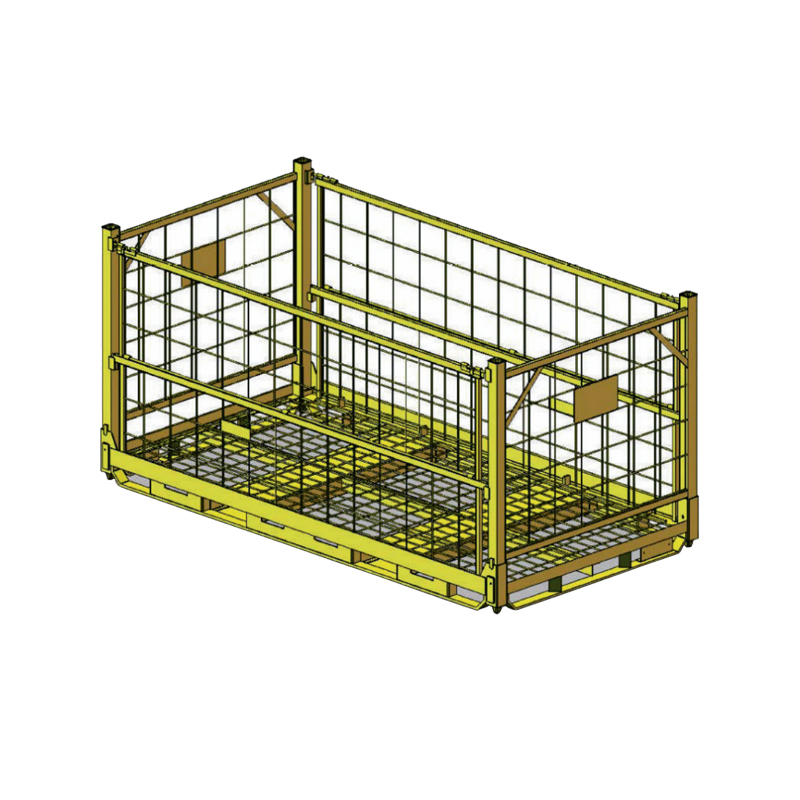
A wire mesh container is a welded steel-wire storage and transport unit designed for repeatable handling in warehouses, production lines, and distribution. Compared with one-way packaging, it is built for circulation: it protects goods during internal moves, supports inventory visibility, and improves space utilization through stacking and collapsible designs.
From a manufacturer’s perspective, the best results come when the container specification is aligned to your load, your handling method (forklift/hoist/pallet truck), and your workflow (JIT staging, kitting, WIP control, returns). The sections below focus on the practical checks that prevent common issues such as deformation, unstable stacking, or slow picking access.
Wire mesh containers are most effective when you need a reusable unit that can move safely between processes while keeping items visible. The open-grid design improves airflow and makes it easier to confirm contents without opening a solid bin, which can reduce mis-picks and speed up cycle counts.
If your main constraint is damage during handling, the container’s frame, door design, and locking details matter more than appearance. If your main constraint is space, folding ratio and safe stack height become the priority.
When comparing a wire mesh container from different suppliers, the most meaningful “apples-to-apples” comparison is: rated load , wire diameter , mesh aperture , frame reinforcement , and stacking method . The goal is to prevent long-term deformation and ensure stable stacking under repeated cycles.
For heavy-duty use, pay attention to how the bottom is reinforced and how the legs transfer load to the floor or pallet. Designs using reinforced bottom structures (for example, U-shaped groove reinforcement and dedicated supporting legs) reduce sagging and improve safety during forklift handling. As a practical rule, select a rated load with a margin to account for shock loads from handling (starting/stopping, uneven floors, and stacking impact).
Mesh such as 50×50 mm is commonly used when you need better retention of smaller items or improved side stiffness. Options like 50×100 mm can reduce weight and improve visibility/airflow for larger goods. Wire diameter is equally important: moving from around 4.8 mm to 6.4 mm meaningfully increases rigidity for heavier loads and higher stacking demands.
Below is a practical reference drawn from commonly ordered models. For full ranges and options (including half-open or full-open access), you can review the wire mesh pallet cage specifications and select the closest match to your pallet footprint and pick method.
| Model | Nominal Size (W×D×H, mm) | Mesh (mm) | Wire (mm) | Rated Load (kg) | Volume (m³) |
|---|---|---|---|---|---|
| BTS-A-3 | 800×600×640 | 50×50 | 6.0 | 500 | 0.21 |
| BTS-A-5 | 1000×800×840 | 50×50 | 6.0 | 1200 | 0.50 |
| BTS-A-7 | 1200×1000×890 | 50×50 | 6.0 | 1500 | 0.82 |
| BTS-B-7 | 1200×1000×890 | 50×50 | 6.4 | 2000 | 0.82 |
| BTS-AS-7 | 1200×1000×890 | 50×100 | 6.0 | 1000 | 0.82 |
| BTS-C-2 | 800×500×540 | 25×50 | 4.8 | 500 | 0.135 |
Use these examples to narrow the “shape” of the container first (footprint, height, and access), then finalize the structural details (wire, mesh, reinforcement, and finish) based on your load and environment.
Space efficiency is often the deciding factor for a wire mesh container project. Two features drive the biggest gains: safe stacking when loaded, and compact storage when empty.
A well-designed container can be stacked with a forklift or hoist to create three-dimensional storage. In many warehouse layouts, up to four layers is a practical stacking approach when the load and container structure are matched correctly. The core requirement is stable load transfer through the legs and consistent geometry so the stack does not “walk” over time.
When containers circulate between sites (or between production and a consolidation point), empty backhaul cost can exceed the initial purchase delta between two designs. A straight-stacking, foldable design can reduce the stored footprint dramatically; for example, some configurations can occupy about 1/5 of the space when folded compared with the in-use state. In practice, this can translate into meaningfully fewer return trips, subject to trailer cube, permissible stacking, and handling constraints.
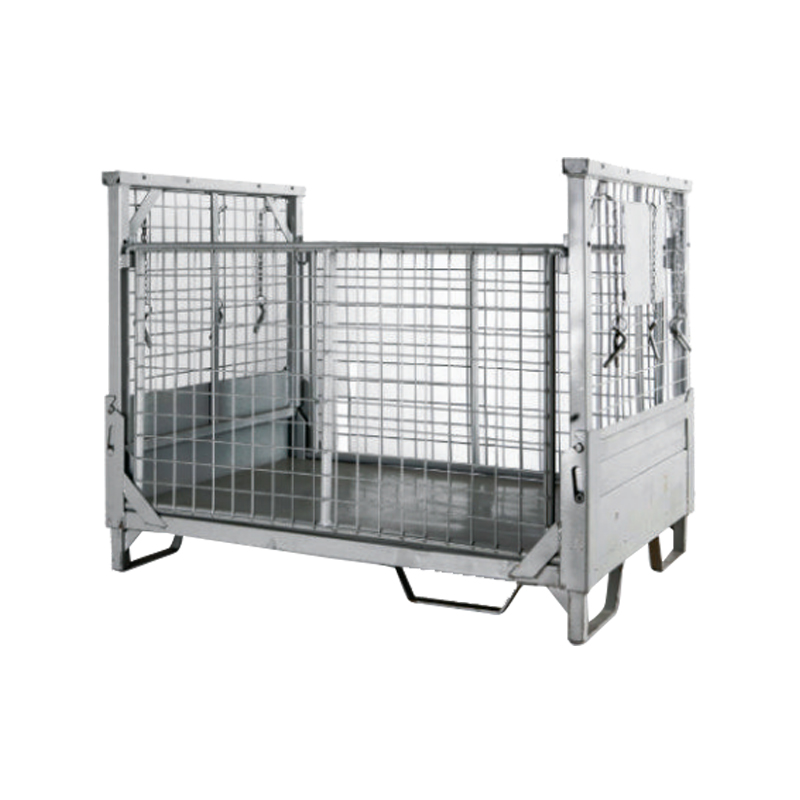
If folding and space reduction is a top priority, review a straight-stacking design such as a stackable wire mesh container , which is intended for convenient folding/unfolding while supporting multi-layer stacking in active storage.
Operational speed depends on access. A wire mesh container can be configured with half-open or full-open doors, front/rear access, or specialized opening layouts to suit picking, kitting, and replenishment.
Small structural details can prevent recurring problems such as misalignment after repeated cycles or unintended opening during movement. Look for features aligned to your risk profile, such as post protection elements, door stops, and reliable latching behavior. For example, large-format designs often emphasize robust hinges for door durability, door stoppers for stability, and self-locking latch concepts to reduce unauthorized or accidental opening during transport.
Confirm how the container will be moved in reality: forklift forks must clear the leg spacing; hoists need safe attachment considerations; pallet trucks require adequate ground clearance. Many operations benefit from designs intended to work across forklifts, hoists, trolleys, and pallet trucks—especially when the container is used from raw-material inbound to finished-goods outbound.
If your use case involves frequent folding and stacking with a strong emphasis on stable stacking geometry, a folding metal wire mesh container may be appropriate, particularly where tapered feet and reinforced corner details are used to keep stacks stable.
Finish selection should be driven by where the container lives: dry indoor storage, humid environments, export lanes, or outdoor yards. A mismatch here is one of the fastest ways to increase total cost through corrosion, cleaning effort, and shortened service life.
Even the best finish will wear if the container regularly contacts sharp edges or heavy metal parts. If abrasion is unavoidable, prioritize structural robustness (wire diameter, frame reinforcement) and consider protective additions such as internal liners or dedicated contact points—so the finish is not the only “defense” against wear.
A wire mesh container is rarely “one-size-fits-all.” In manufacturing supply, many projects require adapting the base cage to the part geometry, the handling route, and the protection level required. The most useful customizations are those that remove a recurring operational constraint (damage, slow picking, unstable stacking, or poor traceability).
When you request customization, provide your part dimensions, unit weight, target load per container, handling method, and stacking requirement. This allows the manufacturer to confirm the correct reinforcement and door/lock geometry before production, reducing change orders and field issues.
A well-written specification improves quotation accuracy and reduces long-term risk. Below is a practical checklist procurement and engineering teams can use to align expectations with the supplier’s design and manufacturing approach.
If you need a starting point for selecting models and options, the product category overview for wire mesh container solutions can help you shortlist the most appropriate style (pallet cage, stackable, foldable, or large-format) before you finalize load and finish details.
Conclusion: a wire mesh container delivers the best ROI when it is specified around your load, access method, and return/storage constraints. Focus first on the structural fundamentals (load rating, wire/mesh, bottom reinforcement, stacking geometry), then refine the options (doors, finish, and accessories). This approach typically reduces damage, improves space utilization, and keeps handling predictable over long service cycles.
Copyright © 2024 บริษัท Shanghai Betis Logistics Equipment, Ltd. All Rights Reserved.